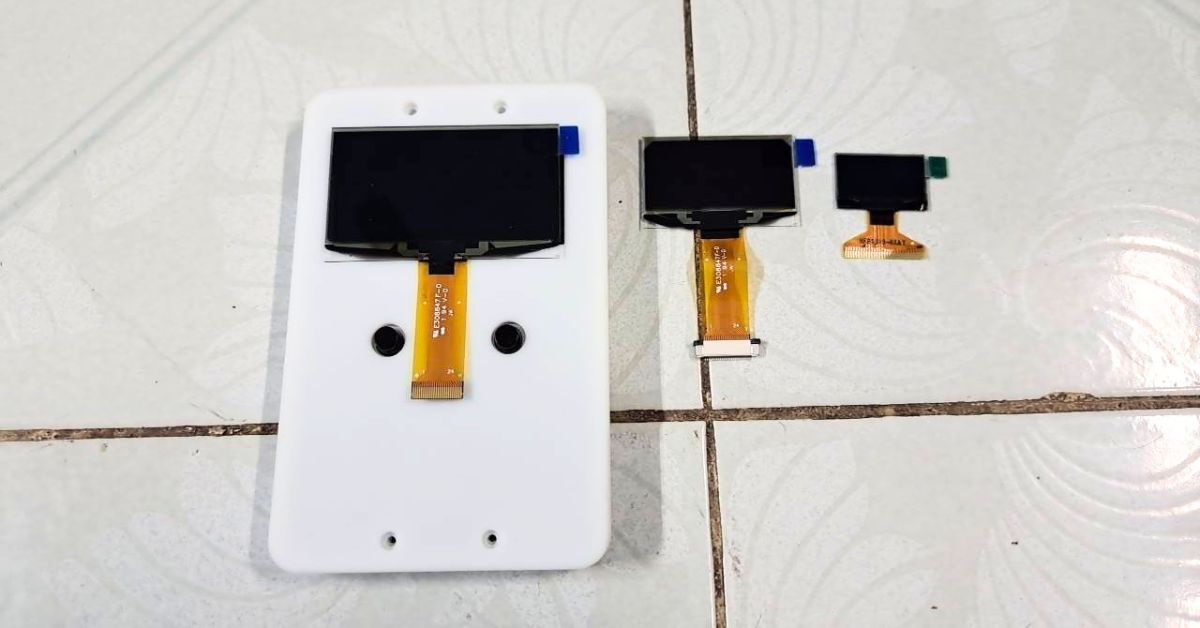
A screen you have to squint at isn't just annoying — on a hardware wallet it's a security problem. You can't verify what you can't read. So this week we're choosing the display, and it came down to three sizes on the bench.
The screen is the security
The screen is where you check the address and the amount before you approve a transaction — the one moment the device shows you the truth. If it's too small, people stop reading it, and a transaction you don't actually read is a transaction you don't actually control. Plenty of wallets ship a cramped little screen to shave cost. We didn't want that trade-off if we could avoid it.
Three sizes, side by side
We put three OLED panels next to each other — 2.24", 1.54" and 0.96", largest to smallest. Big enough to read a full address at a glance, small enough to keep the device palm-sized and the price sensible: that's the balance we're solving for. The largest is the easiest to read; the smallest is the cheapest and most compact; the 1.54" sits in between.
Readable, but still palm-sized
We're leaning toward the larger, more readable end — a device you verify on every single time deserves a screen you never have to squint at. But it still has to vanish in your palm and stay affordable, so we're testing each one in the case before we commit. Better to hold all three than to guess.
Which would you want — the big readable one, or the compact one? Tell us. And if you'd like to see them in the case yourself, we'll have the prototype at Bitcoin Thailand Conference 2026.