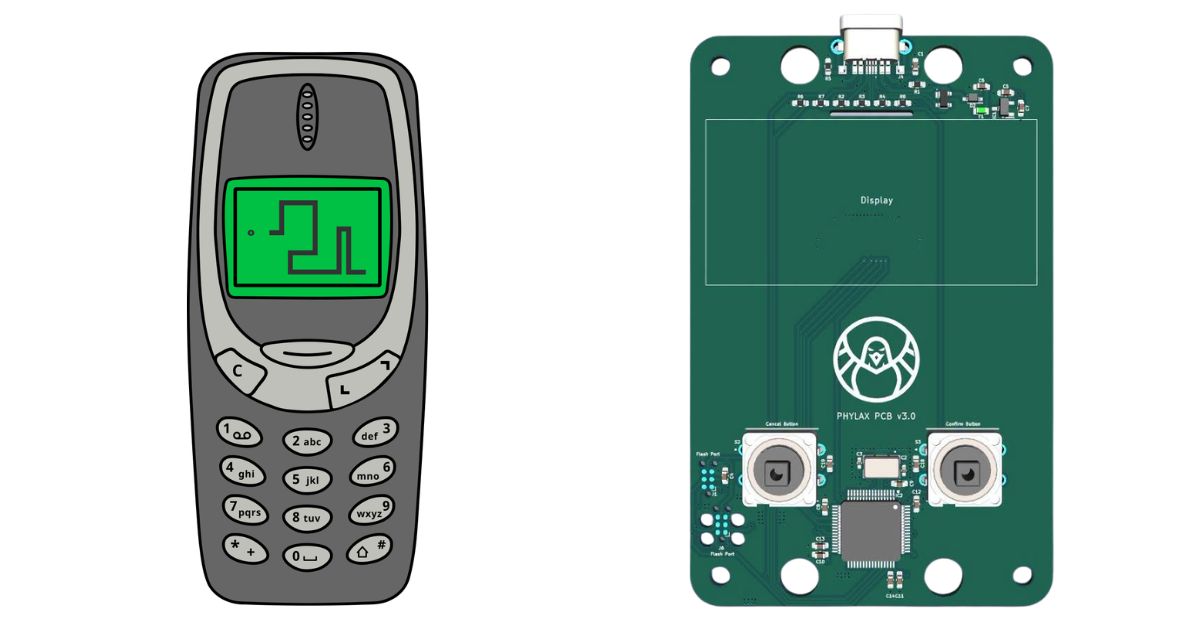
There's one phone people still joke is indestructible: the Nokia 3310. That's exactly the philosophy we want for PHYLAX — no frills, one job, and it just keeps working, year after year.
Why the 3310
The 3310 wasn't loved because it did the most. It did a few things — call, text, Snake — and did them so reliably it became a meme for toughness. That's the opposite of the modern gadget that feels obsolete in three years. A device guarding your Bitcoin should be the tough, boring one you can still trust a decade from now.
Core function only
PHYLAX does one job — protect your Bitcoin keys and sign transactions. Two buttons, Cancel and Confirm, a screen, and a USB-C port. No apps, no NFC party tricks, no notifications. Every feature we don't add is one less thing to break, leak, or attack.
Bitcoin only, and backward compatible
No shitcoins — not now, not later. And PHYLAX follows the open Bitcoin standards, so it stays backward compatible: your 24-word seed works on any compatible wallet, and the device keeps working with the ecosystem as it grows. Standards outlive products — that's how a wallet you buy today still makes sense in ten years.
Built to last a decade
Everything in this journal points at one goal — no battery, an industrial-grade chip, gold contacts, million-cycle buttons, a case you'd trust to drop. Add it up and you get a wallet you can still rely on ten years from now. Bitcoin is a long game; the thing that guards it should be too.
That's the whole idea in one photo: a Nokia 3310 next to PHYLAX PCB v3.0. Want to hold the indestructible one? We'll have the prototype at Bitcoin Thailand Conference 2026.