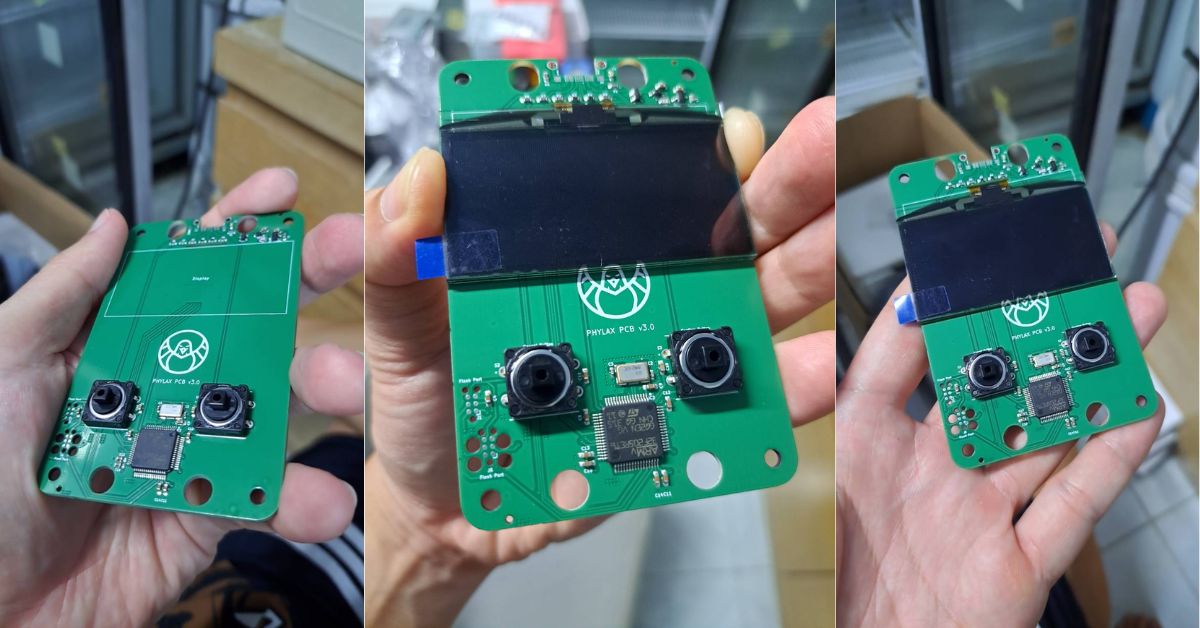
A screen that's easy to read and a device that stays compact sound like opposites. This week we tried to have both — we fitted the large 2.24-inch OLED onto a modified, smaller PCB.
Two things that pull against each other
A few updates ago we chose a screen big enough to actually read — because on a hardware wallet, the display is where you verify a transaction. But we also found the first case was too big to love. So there's a real tension: a large, easy-to-read screen versus a compact, palm-friendly device. This build is our first proper attempt at getting both at once.
The 2.24-inch on a tighter board
We kept the big, easy-to-read 2.24-inch OLED — readability is the one thing we won't trade away, because a screen you can't read is a transaction you can't verify. Then we redrew the board around it: PCB v3.0 is smaller than the original, trimming the body without shrinking the screen. Bigger where it counts, smaller everywhere else.
Still plenty to test
We'll be honest — this is nowhere near done. Button placement, how it sits in the case, the exact board outline, the fit and feel in the hand: there's a long list still to test and refine. But holding a big, clear screen on a smaller board is a real step in the right direction. One stepping stone toward the goal.
That's how this whole thing gets built — one honest step at a time, in the open. If you'd like to see where it's at in person, we'll have the prototype at Bitcoin Thailand Conference 2026.