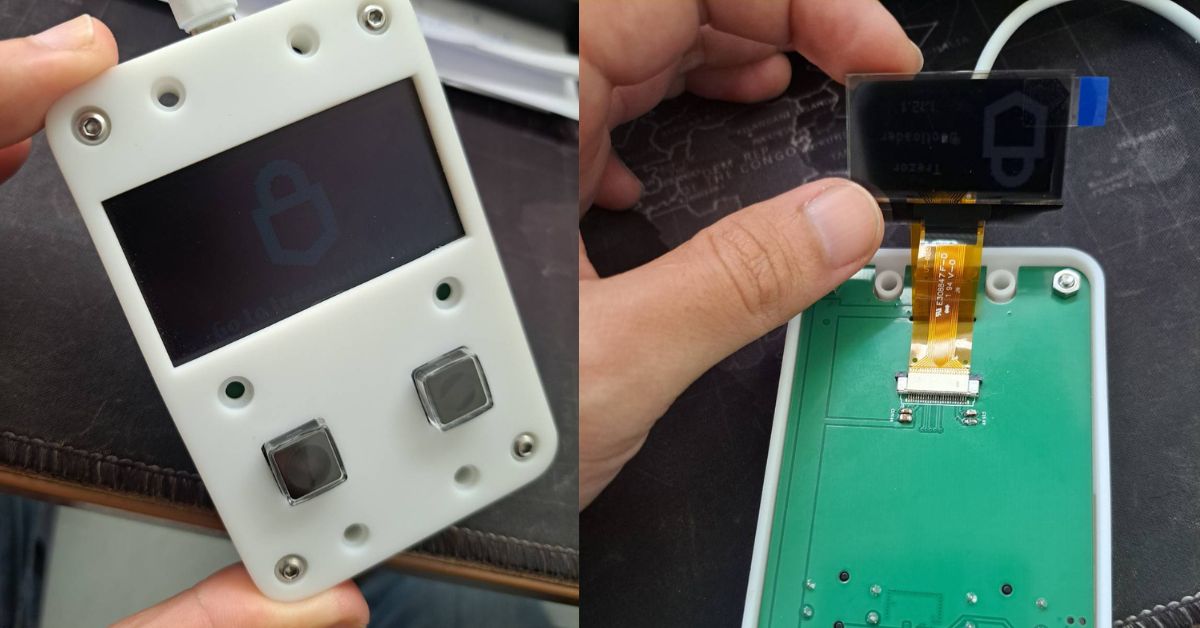
This week we put the three candidate screens on the bench and powered them up. Good news on the display we planned to ship — and one honest problem we still have to solve.
The 2.24-inch works perfectly
The large 2.24-inch OLED is the one we always expected to use, and it did exactly what we hoped — bright, crisp, and easy to read across the board. On a hardware wallet the screen is where you verify a transaction, so "easy to read" isn't a nice-to-have; it's the whole point. This is the size we're moving forward with.
The other two
The 1.54-inch panel didn't come up in testing — but we weren't planning to use it anyway, so that's no loss. The smallest, the 0.96-inch, does display, but the contrast is too low to be comfortable to read. Both confirmed what we already believed: the larger screen is the right call.
The real problem: USB
Now the honest part. USB still isn't working — and since PHYLAX is wired-only, the USB-C connection is how the device talks to your computer. It's not optional; it has to work. So this is our main focus right now: get the USB link stable before anything else moves forward. We'll report back the moment it's fixed.
This is what building in the open actually looks like — we show the wins and the problems, not just the highlight reel. If you want to follow the fix and hold the prototype yourself, we'll have it at Bitcoin Thailand Conference 2026.